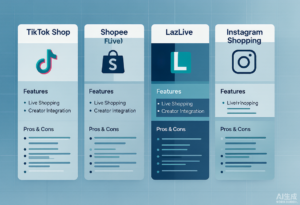
When we talk about social commerce in Southeast Asia, the conversation usually centres on TikTok Shop, Shopee Live, and LazLive. But there’s a parallel commerce ecosystem operating quietly at enormous scale: community commerce — transactions happening inside Facebook Groups, LINE chats, WhatsApp conversations, and Telegram channels. In Thailand, 40% of consumers make purchases via messaging apps. In Vietnam, it’s 36%. This isn’t a niche. It’s the dominant mode of commerce for millions of consumers.
Why Community Commerce Works in Southeast Asia
The answer is structural. Southeast Asian consumers trust people, not platforms. In markets where e-commerce infrastructure is still maturing and trust in faceless online storefronts is low, the recommendation of a community admin, a LINE group moderator, or a WhatsApp contact carries vastly more weight than a product page. In Thailand, 56 million monthly active LINE users make it the country’s most-used app — not just for messaging, but for payments, news, and increasingly, shopping. Facebook remains the dominant social commerce platform in markets like Cambodia (78% penetration), Myanmar (72% use Facebook Marketplace), and Thailand (55% of social commerce happens on Facebook).
The Three Models of Community Commerce
Facebook Groups: The most established model. Niche communities — parenting groups, hobbyist communities, local neighbourhood groups — function as trusted marketplaces where members buy and sell based on reputation and admin endorsement. In Myanmar, 1.8 million active sellers operate through Telegram marketplaces alone. In Indonesia, WhatsApp Business facilitates a significant portion of the country’s informal e-commerce.
LINE Official Accounts + Shopping: In Thailand, LINE has evolved from a messaging app into a full commerce platform. LINE Shopping’s user engagement grew 60% year-over-year in 2026, with 2.1 million active users. Brands use LINE Official Accounts for customer service, order-taking, and payment — essentially running their entire business through a chat interface. LINE’s integration with Rabbit LINE Pay makes the purchase journey seamless.
WhatsApp Business: Across Indonesia, Malaysia, and Singapore, WhatsApp has become the default customer service and sales channel for small and medium businesses. With 90.9% penetration in Indonesia, it’s more universal than any e-commerce platform. Volvo Malaysia generated a 600% ROI through WhatsApp Business campaigns, demonstrating that community commerce isn’t limited to low-value transactions — it works across B2C and B2B.
What This Means for Brands
Community commerce is inherently harder for international brands to access than platform commerce — it requires local presence, local-language capability, and relationship-building at the community level. But the brands that figure it out gain access to consumers who are unreachable through traditional e-commerce advertising. These are high-trust, high-retention customers who buy on recommendation, not on algorithm exposure.
The starting point: identify the communities where your target consumers already gather, establish a genuine presence (not a brand page, but a person), and provide value before you attempt to sell. Community commerce rewards authenticity; it punishes brands that treat it as just another distribution channel.
Want to build a community commerce strategy for Southeast Asia? RedFern Digital can help.