Executive Summary
Southeast Asia’s digital economy is on track to exceed US$300 billion by 2026, driven by a young, mobile-first population of over 680 million people across 11 countries. For brands and businesses looking to enter or scale in the region, the opportunity is enormous — but so is the complexity. From platform selection and influencer strategy to cross-border logistics and cultural nuance, success in SEA requires a playbook that goes far beyond running ads.
This guide brings together RedFern Digital’s deep expertise across e-commerce platforms, social commerce, KOL marketing, and market entry strategy. Whether you’re a DTC brand launching on TikTok Shop, an FMCG company navigating Shopee and Lazada, or a global brand building your presence from scratch, you’ll find actionable insights and strategic frameworks to guide your next move.
The SEA Digital Economy at a Glance
Southeast Asia is not one market — it’s a collection of distinct economies, cultures, and consumer behaviours bound together by rapid digitisation. Indonesia, with over 270 million people, is the largest market by volume. Vietnam is the fastest-growing, with a young, tech-savvy population and GDP growth outpacing regional peers. Thailand and the Philippines offer mature social media ecosystems, while Malaysia and Singapore serve as regional hubs for premium and cross-border commerce.
- 680M+ population — larger than the EU and North America combined
- 70%+ internet penetration and climbing, overwhelmingly mobile-first
- US$300B+ digital economy projected for 2026 (Google-Temasek-Bain)
- Social commerce is the dominant discovery channel, not traditional search
- Livestreaming drives 20-40% of GMV on major platforms
The E-Commerce Platform Landscape
Choosing the right platform is the single most consequential decision for brands entering Southeast Asia. Each platform has distinct strengths, audience profiles, and operational requirements. The winners in 2026 are running multi-platform strategies — but the sequence and weight of each platform matters enormously.
TikTok Shop: The Disruptor
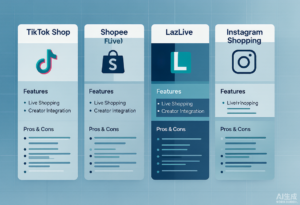
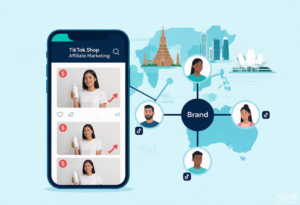
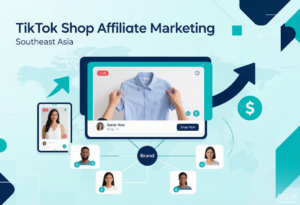
TikTok Shop has fundamentally reshaped e-commerce in Southeast Asia. What started as an experiment in shoppable short video has become a full-fledged commerce ecosystem — and in markets like Vietnam, it’s now the second-largest e-commerce platform by GMV. The key to TikTok Shop is its content-first model: products are discovered through entertainment, not search queries. Brands that understand this — investing in creator partnerships, affiliate programmes, and live selling — are seeing explosive growth.
Read our deep dives: TikTok Shop Vietnam: From Underdog to Powerhouse | TikTok Shop vs Shopee: Platform Comparison | Why Vietnam Is TikTok’s Most Important Market | Building a TikTok Shop Affiliate Programme That Actually Drives Revenue
Shopee: The Incumbent Powerhouse
Shopee remains the largest e-commerce platform in Southeast Asia by total users and transaction volume. Its strength lies in breadth: massive product selection, built-in gamification (Shopee Coins, Shake, Lucky Prize), and aggressive promotional cycles like 9.9, 10.10, and 11.11. In 2026, Shopee’s biggest differentiator is Shopee Live — its livestreaming feature that has transformed the platform from a transactional marketplace into a social commerce destination.
Read more: How Shopee Live Is Rewriting Shopping in Southeast Asia | Social Commerce Platform Showdown: TikTok Shop vs Shopee Live vs LazLive
Lazada: The Brand-Building Platform
Backed by Alibaba, Lazada is often the platform of choice for established brands seeking a more premium positioning. Its LazMall channel offers vetted, authentic products with stronger brand pages, and LazLive brings livestreaming commerce to brand-conscious shoppers. Lazada’s logistics arm (powered by Alibaba’s Cainiao) provides reliable cross-border fulfilment — a critical advantage for international brands.
Read more: Launch Your Brand on Lazada: Step-by-Step Strategy | Lazada’s Path to Profitability in SEA
Emerging Platforms: Temu, Facebook Shops & More
The landscape is far from static. Temu’s aggressive expansion into Thailand and Vietnam has shaken up the value segment, while Facebook Marketplace, LINE shopping in Thailand, and WhatsApp commerce in Indonesia are creating parallel commerce channels outside traditional marketplaces. Brands that treat this as a “Shopee or Lazada” binary decision are missing significant revenue streams.
Read more: Temu’s Expansion into Thailand | Community Commerce: Facebook Groups, LINE & WhatsApp
The Social Commerce Revolution
Social commerce — where product discovery, consideration, and purchase happen within social platforms — is not a side channel in Southeast Asia. For many categories and demographics, it is the primary channel. This is fundamentally different from Western markets, where social media drives traffic to external websites. In SEA, the transaction stays on-platform.
Livestreaming: The New Storefront
Livestreaming commerce has evolved from a novelty to infrastructure. In markets like Vietnam and Thailand, live selling sessions are scheduled daily events with loyal audiences, repeat purchasers, and conversion rates that far exceed static listings. The brands winning in this space invest in proper studio setups, trained hosts, and data-driven scheduling — not just pointing a phone at a product.
Read more: Live Shopping Production: The Studio Setup Brands Actually Need | Livestreaming as Everyday Retail Infrastructure
Community Commerce: The Quiet Giant
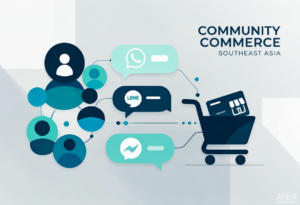
Facebook Groups, LINE communities, and WhatsApp group chats are driving billions in commerce that never touches a traditional e-commerce platform. In Thailand, LINE is both a messaging app and a shopping channel. In Indonesia, WhatsApp groups function as micro-marketplaces. In Vietnam and the Philippines, Facebook Groups are where purchase decisions start. Community commerce is harder to measure than marketplace sales — but for many categories, it’s where the trust and conversion actually happen.
Read more: The Rise of Community Commerce in SEA
Influencer & KOL Marketing in Southeast Asia
Influencer marketing in SEA operates differently than in the West. The ecosystem is dominated by local creators with highly engaged, trust-based audiences. Mega-influencers and celebrities drive awareness, but nano and micro-influencers consistently deliver higher engagement rates and conversion. The most sophisticated brands are building structured affiliate programmes that treat creators as a performance channel — not just a branding line item.
Read more: KOL Marketing: Complete Guide for 2026 | Nano vs Mega Influencers: Which Actually Converts? | Building a TikTok Shop Affiliate Programme
Key Markets in Focus
Vietnam: The Growth Engine
Vietnam is Southeast Asia’s most exciting e-commerce story. A population of 100 million with a median age of 32, rising disposable incomes, and the highest TikTok penetration in the region make it a laboratory for social commerce innovation. TikTok Shop’s rapid rise here — from underdog to the #2 platform in under two years — is a case study in how content-driven commerce can disrupt incumbents. For FMCG brands, health supplements, beauty, and fashion, Vietnam is the market to watch in 2026 and beyond.
Read more: Vietnam Consumer Trends 2026 | Health Supplements in Vietnam | Why Vietnam Is TikTok’s Most Important Market
Thailand: The Sophisticated Social Shopper
Thailand’s e-commerce market is mature by regional standards, with high social media engagement and a strong livestreaming culture. LINE is deeply embedded in the consumer journey — from discovery through LINE Official Accounts to purchase through LINE Shopping. Beauty, skincare, and fashion dominate, but food and beverage is the fastest-growing category as quick commerce reshapes urban consumption patterns.
Indonesia: The Volume Play
Indonesia is the prize — and the puzzle. With 270 million consumers spread across 17,000 islands, the market opportunity is unmatched, but logistics and infrastructure challenges are real. Tokopedia (now part of GoTo) and Shopee dominate, while TikTok Shop has been rebuilding after regulatory challenges. The Halal economy alone represents a US$2.8 trillion opportunity that cuts across food, beauty, fashion, and pharmaceuticals.
Read more: Unlocking the Halal Economy in SEA
Shopping Festivals & Seasonal Strategy
If there’s one rhythm every brand operating in Asia needs to master, it’s the shopping festival calendar. These aren’t just sales events — they are cultural moments that drive discovery, trial, and category creation. The major dates every brand needs on their calendar:
- 9.9, 10.10, 11.11, 12.12 — Platform mega-sales (Shopee, Lazada)
- Single’s Day (11.11) — The world’s largest shopping event, still evolving
- 618 (June 18) — Mid-year festival, originally Chinese, now regional
- Ramadan & Hari Raya — Critical for Indonesia, Malaysia, Brunei
- Tet (Lunar New Year) — Vietnam’s biggest spending season
Brands that plan 90 days ahead — securing platform slots, creator bookings, and inventory — consistently outperform those who treat festivals as last-minute discount events.
Read more: Single’s Day: Still the World’s Biggest Shopping Festival | What the 618 Festival Tells Us About E-Commerce
Operations & Cross-Border Logistics
The unglamorous reality of SEA e-commerce: your marketing only works if the product actually arrives. Cross-border fulfilment in Southeast Asia presents unique challenges — fragmented last-mile networks, customs complexity (varying dramatically between Vietnam, Indonesia, Thailand, and the Philippines), and consumer expectations calibrated to domestic delivery speeds. Successful brands either partner with platform logistics (Shopee Xpress, Lazada Logistics) or invest in local warehousing through 3PL partners. There is no one-size-fits-all solution.
Read more: Cross-Border Logistics: Solving the Last-Mile Puzzle
Measuring What Matters
Too many brands measure social commerce the same way they measure traditional e-commerce — by last-click attribution and ROAS. This misses the point. In content-driven commerce, a TikTok video viewed in January may drive a Shopee purchase in March. An influencer’s unboxing may fuel offline word-of-mouth that never appears in any dashboard. The smartest brands in SEA are building measurement frameworks that capture the full funnel: awareness (reach, engagement, share of voice), consideration (link clicks, shop visits, follower growth), and conversion (GMV, repeat purchase rate, customer lifetime value) — and acknowledging that not everything can be measured with the same precision.
Read more: Measuring Social Commerce ROI: The Metrics That Actually Matter
Emerging Trends to Watch in 2026-2027
- AI-powered commerce — From AI shopping assistants to automated content generation, artificial intelligence is reshaping product discovery and personalisation. But with it comes risk: AI fraud is a growing concern that brands need to address proactively.
- Quick commerce (q-commerce) — 15-minute delivery is reshaping FMCG retail in urban centres. Platforms like GrabMart and GoMart are creating new consumer expectations that spill over into traditional e-commerce.
- UGC as a growth engine — User-generated content consistently outperforms branded content. DTC brands that build systematic UGC programmes — incentivising reviews, unboxing videos, and authentic testimonials — are seeing compounding returns.
- Halal economy acceleration — The US$2.8 trillion global Halal market is increasingly digital, with platforms and brands building dedicated Halal storefronts and certification workflows.
Read more: AI Fraud: What Brands Must Know | Quick Commerce: The 15-Minute Delivery Revolution | UGC as a Growth Engine for DTC Brands | The Halal Economy in SEA
How RedFern Digital Can Help
We’re not a consultancy that hands you a PowerPoint deck and walks away. RedFern Digital is a full-service digital marketing and e-commerce agency with boots on the ground in Shanghai and Ho Chi Minh City. We help international brands enter, grow, and win in Southeast Asia through:
- E-Commerce Strategy & Operations — Platform selection, store setup, day-to-day operations across Shopee, Lazada, TikTok Shop, and more
- Social Commerce — Livestreaming production, short-form content strategy, community management
- KOL & Influencer Marketing — Creator sourcing, campaign management, affiliate programme design
- Paid Media — Performance marketing across TikTok, Facebook, Instagram, and platform ad ecosystems
- Content Marketing — Localised content production, from UGC to studio-quality video
- Consumer Research & Data — Proprietary tools including INRES and Mined Ecommerce Data for actionable market intelligence
- Creative & Branding — Visual identity, packaging adaptation, and creative asset production for SEA audiences
Whether you’re a brand making your first move into Southeast Asia or an established player looking to scale, we bring the local expertise, operational rigour, and creative firepower to make it happen.
Frequently Asked Questions
Which e-commerce platform should I launch on first?
It depends on your category, target audience, and operational capabilities. Our platform comparison guide walks through the decision framework in detail. Generally, Shopee offers the broadest reach and most mature infrastructure; TikTok Shop offers the highest growth potential for content-driven categories; Lazada is ideal for brand-building and premium positioning. Most successful brands run at least two platforms.
Do I need local entities to sell in Southeast Asia?
Platforms increasingly support cross-border selling (Shopee International Platform, LazGlobal), but local entities unlock benefits: better logistics rates, access to platform promotions, and eligibility for local payment methods. The right approach depends on your scale and commitment level.
How much should I budget for KOL marketing?
The range is wide — from US$500 nano-influencer campaigns delivering authentic UGC to US$50,000+ mega-influencer partnerships for major launches. Our KOL guide breaks down costs, tiers, and expected ROI by platform and market. The most efficient strategy in 2026 is a barbell approach: mass nano/micro for conversion, selective macro for brand lift.
What’s the biggest mistake foreign brands make in SEA?
Treating Southeast Asia as a single market. A campaign that works in Thailand won’t automatically work in Vietnam. A product priced for Singapore won’t sell in Indonesia. Localisation isn’t just translation — it’s platform selection, pricing architecture, content formats, creator partnerships, and payment preferences. The brands that win invest in market-specific strategies, not regional shortcuts.
Last updated: July 2026. For the latest insights, browse our full collection of articles on Worth the Read or get in touch with our team.