The Opportunity: Why Southeast Asia Is the World’s Most Exciting E-Commerce Region
Southeast Asia is no longer an emerging market — it’s a US$159 billion e-commerce economy growing at over 15% annually, with 400 million digital consumers across six core markets. For international brands, the region offers something increasingly rare: a large, young, mobile-first consumer base where the platform landscape is still being shaped — and where early movers can still build durable competitive advantages.
But the region is not one market. It’s six distinct economies (Indonesia, Thailand, Vietnam, Philippines, Malaysia, Singapore), each with its own platform dynamics, consumer behaviour, logistics infrastructure, and regulatory environment. A strategy that works in Bangkok will fail in Jakarta. The brands that win are the ones that treat Southeast Asia not as a single expansion market, but as a portfolio of markets, each requiring its own playbook.
This guide is your starting point. We’ve mapped the landscape across platforms, consumers, marketing channels, logistics, and key commercial events — with deep-dive articles linked throughout so you can go as deep as you need.
1. The Platform Landscape: Where Southeast Asia Actually Shops
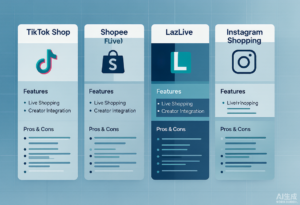
Southeast Asia’s e-commerce is dominated by three platforms — Shopee, Lazada, and TikTok Shop — but the balance of power between them is shifting fast.
Shopee remains the volume leader across most markets, with the largest user base and the deepest penetration in markets like Indonesia and Malaysia. It’s the default starting point for most brands entering the region. Lazada, backed by Alibaba, offers a more brand-friendly ecosystem with stronger logistics integration and a more affluent user base — but it’s been losing ground to Shopee on pure GMV.
The real disruption is TikTok Shop, which has gone from zero to a serious contender in under three years. TikTok Shop’s fusion of content, community, and commerce — what the industry calls “shoppertainment” — has fundamentally changed how consumers discover and buy products in the region. It’s particularly dominant in Vietnam and Indonesia, where live-shopping behaviour is now mainstream.
Further reading:
- TikTok Shop vs Shopee: Which Platform Is Right for Your Brand in 2026?
- How to Launch Your Brand on Lazada: A Step-by-Step Strategy
- Lazada’s Path to Profitability in Southeast Asia
- Temu’s Expansion into Thailand: What It Means for the Competitive Landscape
2. Platform Strategy: Choosing Where to Play and How to Win
TikTok Shop: The Growth Engine
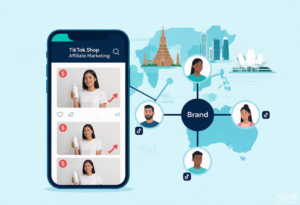
TikTok Shop has rewritten the rules of e-commerce in Southeast Asia. In Vietnam, it’s now the second-largest e-commerce platform by GMV, surpassing Lazada. The platform’s algorithm-driven content distribution means brands don’t need massive followings to reach customers — they need compelling content. Live-stream shopping, affiliate creator networks, and short-form video are the new storefront. The brands succeeding on TikTok Shop are those willing to act like content studios, not just retailers.
Further reading:
- TikTok Shop Vietnam: From Underdog to E-Commerce Powerhouse
- Why Vietnam Is TikTok’s Most Important Market in Southeast Asia
Social Commerce & Live Shopping
Live shopping isn’t a novelty in Southeast Asia — it’s infrastructure. Shopee Live now accounts for a significant share of the platform’s total orders, with conversion rates of 5.8–7.2% on livestream sessions, far exceeding traditional e-commerce benchmarks. The format works because it mirrors the offline shopping experience that SEA consumers trust: a real person demonstrating a product in real time, answering questions, and building rapport. For brands, the implications are clear: if you’re not investing in live commerce capability, you’re leaving conversion on the table.
Further reading:
3. The Southeast Asian Consumer: Young, Digital, and Demanding
Vietnam: The Region’s Most Dynamic Consumer Market
Vietnam deserves special attention. With a median age of 32, 70%+ internet penetration, and an economy growing at 6–7% annually, it’s the region’s most dynamic consumer story. Vietnamese consumers are value-conscious but brand-curious, heavily influenced by KOLs and peer content, and increasingly comfortable with cross-border purchases. Categories like beauty, health supplements, and fashion are seeing especially strong tailwinds.
Further reading:
- Vietnam Consumer Trends 2026: What Foreign Brands Need to Know
- Health Supplements in Vietnam: Key Consumer Trends and Growth
The Halal Economy: A US$2.8 Trillion Opportunity
Indonesia and Malaysia are home to over 260 million Muslim consumers, and the halal economy — spanning food, cosmetics, fashion, and pharmaceuticals — is projected to reach US$2.8 trillion globally by 2027. Halal certification is no longer optional for brands targeting these markets; it’s table stakes. The opportunity extends beyond food into halal cosmetics (growing at 10–15% CAGR) and modest fashion, categories where international brands are still underrepresented.
Further reading:
4. Marketing & Growth: How to Reach and Convert SEA Consumers
The KOL Ecosystem
Influencer marketing in Southeast Asia operates differently from Western markets. The KOL (Key Opinion Leader) ecosystem is structured in tiers — from mega-celebrities to nano-creators — and platform dynamics vary dramatically by country. In Thailand, Facebook and YouTube still dominate; in Vietnam, TikTok is king; in Indonesia, Instagram maintains surprising strength. The most effective brand strategies use a barbell approach: mega-KOLs for awareness, nano-creators for authentic engagement and conversion.
Further reading:
UGC: The Trust Flywheel
User-generated content converts at up to 25% higher rates than brand-produced content in Southeast Asia. The reason is simple: in markets where trust in advertising is low and peer recommendation is everything, UGC serves as social proof at scale. Smart DTC brands are building systematic UGC programmes — incentivising reviews, unboxing videos, and before-and-after content — and feeding that content back into both organic and paid channels. The brands that treat their customers as a content engine outperform those that don’t.
Further reading:
Livestreaming as Retail Infrastructure
What started as an entertainment format has become the backbone of digital retail across Asia. In China, livestreaming is now everyday retail infrastructure — and the same pattern is unfolding across Southeast Asia. Brands that build in-house livestreaming capability today are building a moat that will be expensive to replicate later. The key insight: livestreaming isn’t a campaign tactic. It’s a channel, requiring dedicated talent, consistent scheduling, and platform-native creative strategy.
Further reading:
5. Logistics & Fulfillment: The Operational Backbone
Cross-Border Logistics
Getting products from factory to doorstep across Southeast Asia’s archipelago of 17,000+ islands is one of the hardest operational challenges in global e-commerce. Last-mile delivery in markets like Indonesia and the Philippines can take 5–10 days in remote areas. Customs clearance, warehousing strategy, and returns management all require local expertise. The brands that solve logistics aren’t just cutting costs — they’re building a competitive moat. Key players like J&T Express (handling 7.66 billion parcels annually) and Lazada Logistics are reshaping the infrastructure landscape.
Further reading:
Quick Commerce: The 15-Minute Revolution
The rise of quick commerce — delivery in 30 minutes or less — is reshaping FMCG retail across Southeast Asia. GrabMart, pandamart, and GoMart are building dark store networks that make instant delivery economically viable in dense urban centres. Indonesia’s quick commerce market alone is projected at US$3.11 billion. For FMCG brands, this represents both an opportunity (new distribution channels, impulse purchase behaviour) and a threat (if your product isn’t available in 15 minutes, a competitor’s will be).
Further reading:
- Quick Commerce in SEA: The 15-Minute Delivery Revolution
- Instant Retail Is Rewriting FMCG: Lessons from China
6. Key Commercial Events: Where Scale Happens
Southeast Asia’s shopping calendar is punctuated by mega-events that can deliver months of revenue in a single day. Understanding these events — and building commercial plans around them — is essential for any brand operating in the region.
Single’s Day (11.11) remains the world’s largest shopping festival, but it’s evolving. What started as a Chinese phenomenon now drives significant volume across Southeast Asia through Lazada and Shopee. The playbook is shifting from deep discounting to brand-building, with livestreaming and gamification taking centre stage.
The 618 Mid-Year Festival offers a blueprint for how Chinese-style shopping festivals are evolving — from pure transaction events to content-driven brand experiences — with lessons directly applicable to SEA campaigns like 9.9, 10.10, and 12.12.
Further reading:
- Single’s Day 2025: Still the World’s Biggest Shopping Festival, But Evolving
- What the 618 Festival Tells Us About the Future of Shopping Events
7. Risk & Protection: What Brands Need to Watch
Growth in Southeast Asia comes with real risks. AI-powered fraud — from deepfake KOL endorsements to synthetic review campaigns — is rising across the region’s platforms. Counterfeit goods, trademark squatting, and payment fraud are persistent threats that require proactive monitoring and platform-level enforcement strategies.
Further reading:
Building Your Southeast Asia Strategy: Where to Start
If you’re an international brand looking at Southeast Asia, here’s the framework we recommend:
- Pick your beachhead market. Don’t try to launch in six countries at once. Vietnam and Thailand offer the best combination of market size, growth rate, and operational feasibility for most consumer brands. Indonesia is the biggest prize but the hardest to execute in.
- Choose your platform portfolio. Most brands should start with Shopee (for reach) plus TikTok Shop (for growth and brand-building). Add Lazada if your category skews toward more affluent, brand-conscious consumers. Platform selection should be market-specific — what works in Vietnam won’t necessarily work in Thailand.
- Invest in content, not just ads. The brands winning in Southeast Asia are the ones producing platform-native content at scale: short-form video, live shopping streams, creator partnerships, and UGC programmes. Paid media without organic content is increasingly inefficient.
- Solve logistics before you scale. Your logistics partner is arguably your most important strategic decision. Choose a partner with in-market warehousing, last-mile capability, and returns infrastructure. Don’t try to fulfil cross-border from a single warehouse — distributed inventory is the difference between a 2-day and a 10-day delivery promise.
- Build for mobile-first, local-language experiences. Over 90% of SEA e-commerce happens on mobile. If your product pages, content, and checkout flow aren’t optimised for mobile and available in local languages (Bahasa Indonesia, Thai, Vietnamese), you’re invisible to most of your potential customers.
How RedFern Digital Can Help
We’re a Southeast Asia and China-focused digital agency that helps international brands launch, grow, and optimise their e-commerce operations across the region. Our team spans Shanghai and Ho Chi Minh City, giving us boots-on-the-ground presence in two of the region’s most important markets.
What we do:
- Platform strategy & launch: Shopee, Lazada, TikTok Shop setup, store optimisation, and ongoing management
- Content & creative: Short-form video production, live-stream shopping operations, KOL campaign management, UGC programme design
- Consumer research: Market sizing, category analysis, consumer insight through our proprietary INRES platform
- Logistics & operations: Cross-border fulfilment strategy, partner selection, and operational optimisation
- Paid media: Platform advertising across Shopee, Lazada, TikTok, Facebook, Instagram, and YouTube
Get in touch to discuss your Southeast Asia expansion — we’ll tell you honestly whether we’re the right partner for what you’re trying to do.